In the novel Three Day Road by Joseph Boyden there are many events that can be examined through a Postcolonial lens. The book talks about European colonialism and Residential schools, which resulted in a loss of culture throughout First Nation communities.
In the book, the First Nations live a separate life from the wemistikoshiw, defined as a Canadian who is not a native american, white man. The two communities rarely interacted with each other because the First Nations lived out in the forests, away from the towns. When they did cross paths with each other, it was typically for the purposes of trading goods. “Those Cree who did have furs were treated well, given flour and sugar for their bellies, and rum that loosened their tongues” (Boyden 46). Because of this separation of communities, there was a lot of tension between them when they ventured onto each other’s land. There were several times in the book when the characters traveled to town, but were treated differently and unfairly because they looked and dressed differently. One of the times when Niska went to the town she met an elder who offered her wemistikoshiw clothes to fit in, and told her “‘You must watch yourself around here,’ she said. ‘Or the same thing that happened to your father will happen to you’” (Boyden 169). Her Father was killed by the wemistikoshiw because his way did not abide with the rules of the wemistikoshiw. Niska is one of the few who still lives that way, and this is her way of rebelling against the wemistikoshiw.


The book also told many stories about the characters’ experiences with Residential schools. Both Xavier and Elijah were brought up in a Residential school for part of their life. The wemistikoshiw took children away from their families to ‘educate’ them. The children had to learn and speak English, they were given haircuts and they were forced to live a different way. This is how the wemistikoshiw tried to eliminate the culture of the First Nations children. Niska once again tried to rebel against the wemistikoshiw by taking her nephew, Xavier, from the residential school. “‘You paddle home.’ I took my paddle and clipped her [the nun] sharply on the head for emphasis” (Boyden 219). Niska was strong and courageous to stand up against the school. She was able to take Xavier home and teach him everything that she knew as a way to pass on the traditions of her family.
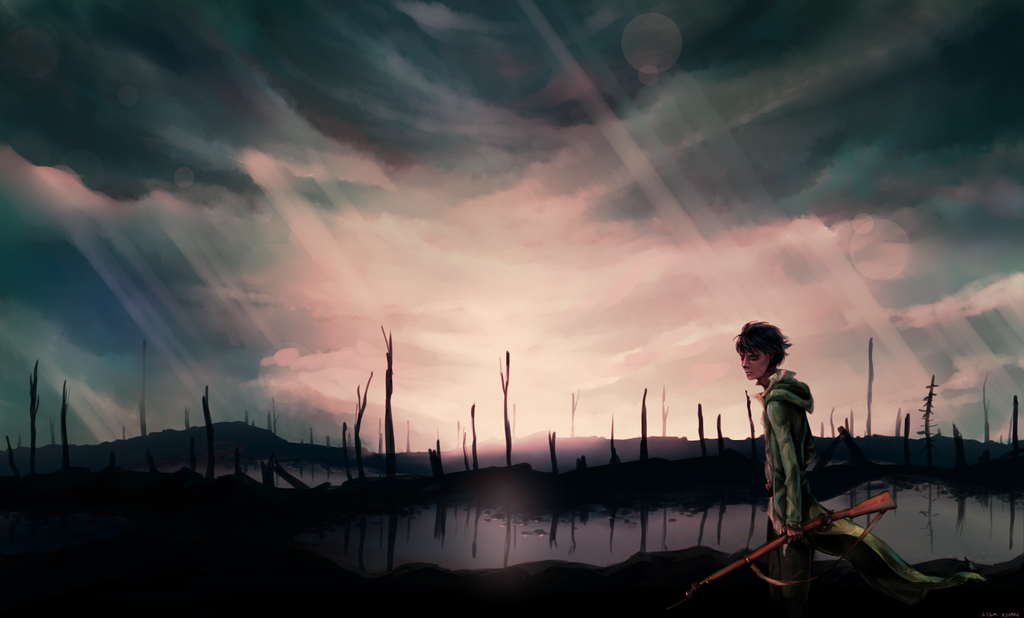
I found it interesting that Xavier and Elijah chose to go and fight in the war because they would be fighting alongside the people who brought all of the changes to Canada. This book gives a thorough demonstration of the mistreatment of First Nations people. The wemistikoshiw used them to get furs and other resources, their families were torn apart to ‘educate’ the children, and their traditional roots were lost.
Works Cited
Boyden, Joseph. Three Day Road. Penguin Canada, 2005.
Facebook, and Post. “Archetypal Theory on Three Day Road.” Archetypal Theory on Three Day Road, tomfouxman12u-eng.blogspot.com/2017/03/archetypal-theory-on-three-day-road.html.
n.a. “History of Prince George.” City of Prince George, n.d., http://www.princegeorge.ca/Things to Do/Pages/Learn about Prince George/HistoryofPrinceGeorge.aspx.
Perkel, Colin. “At Least 3,000 Deaths Linked to Indian Residential Schools: New Research.” CTVNews, CTV News, 19 Feb. 2013, http://www.ctvnews.ca/canada/at-least-3-000-deaths-linked-to-indian-residential-schools-new-research-1.1161081.
 Elly's Blog